What is Riverfly monitoring?
Riverfly monitoring is a simple method used to check the health of rivers and streams by counting certain aquatic insects called riverflies (such as mayflies, stoneflies, and caddisflies). These insects are sensitive to pollution, so their presence and numbers indicate how clean the water is.
Volunteers collect a three minute kick sample from the riverbed, identify and count the riverfly species, and compare the results to expected levels. A sudden drop in these insects can signal pollution or environmental problems.
Why is it be useful in the Arrow Catchment?
Monthly monitoring at a series of sites helps to assess river health over a long period. This will show which parts of the catchment are doing well, and where there may be issues. It will also assist in showing long term trends in improvement, providing supporting evidence for work carried out by organisations such as the Wye and Usk Foundation.
As different riverfly species are sensitive to different levels of pollution, a drop in numbers can be an indication of a pollution event and allows the site to be further investigated by the Environment Agency.
How does the Arrow Riverfly project work?
Volunteers are required to attend a training day, and then all kit and support is provided to allow groups (for safety reasons you can’t test alone) to monitor at agreed sites in the catchment.
It takes a year of testing to get a baseline as a benchmark for river health, after which a ‘trigger point’ is set. If future monitoring reveals that numbers have dropped below it acts as an early warning of pollution or environmental stress.
The Riverfly partnership supports projects across the UK and there is more information about the project on their website.
We are currently monitoring at three sites:
– River Arrow at Eardisland Old Ford (///caravans.drawn.slice).
– River Arrow at Mowley Valley (///mammoths.heeding.magpie).
– Tippets Brook at Lower Burton (///wished.hairstyle.superbly).
We aim to hold more Riverfly Monitoring Training days in Spring 2027.
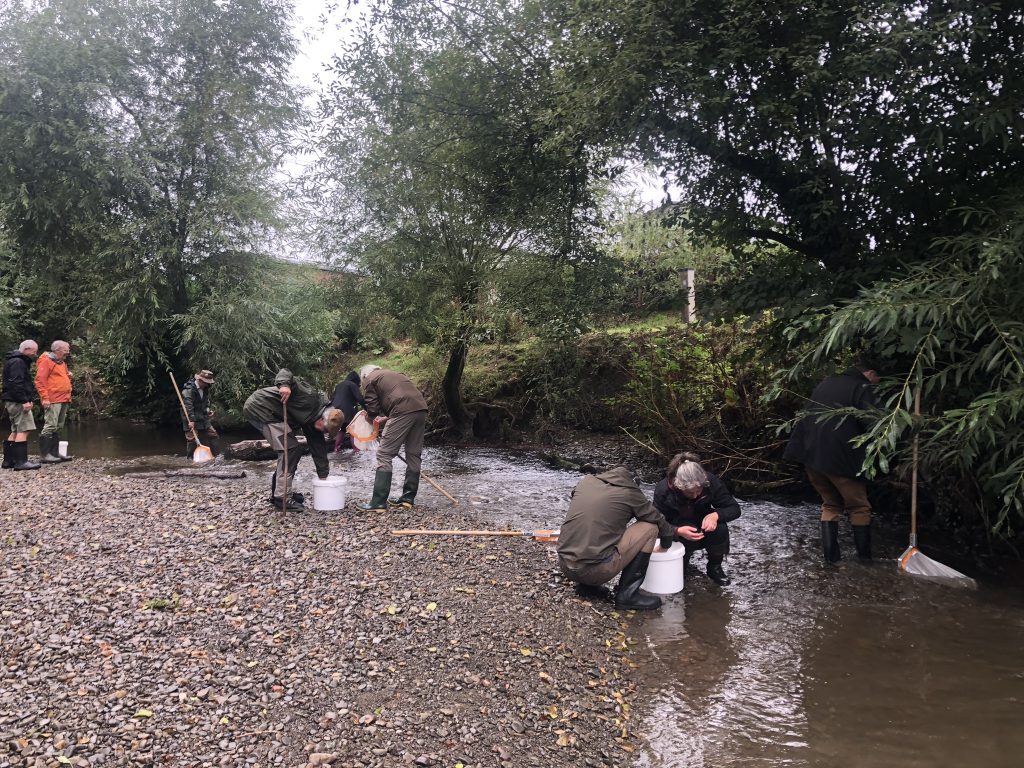
Riverfly Monitoring Training on the Arrow at Eardisland
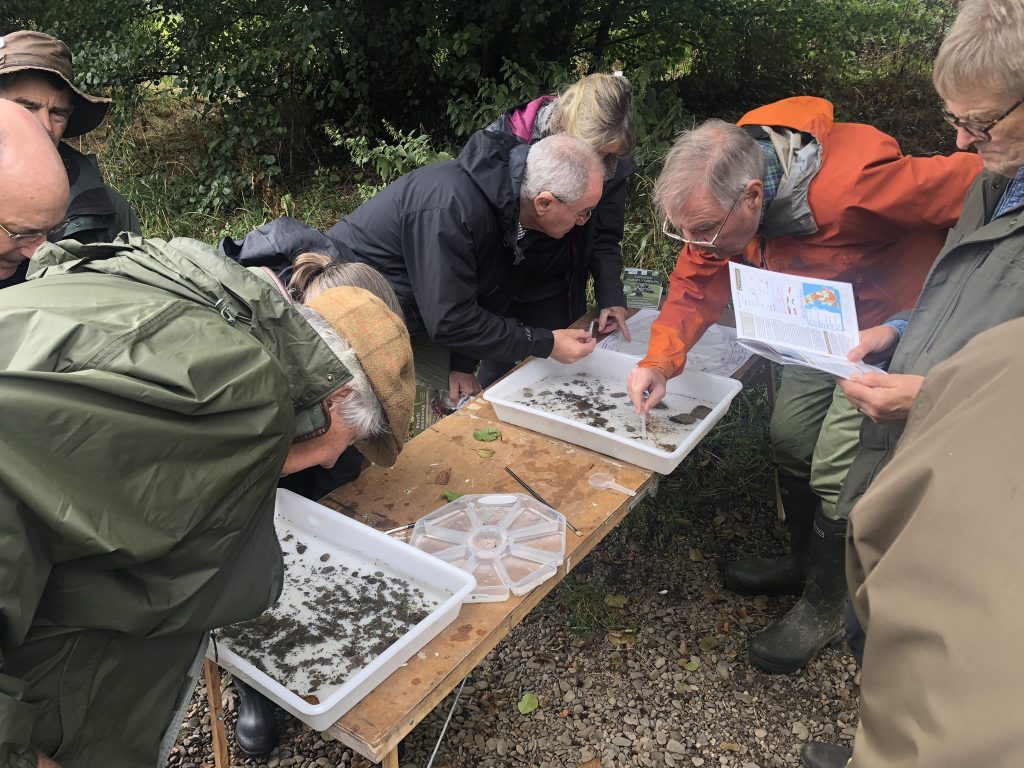
Identifying and counting Riverfly larvae
Who can volunteer?
Riverfly monitoring is a citizen science project — you don’t need any qualifications or experience to become a monitor. All of the skills required will be taught to you at a training day led by an accredited Riverfly Partnership tutor. Monitoring involves entering a river/stream to carry out a kick sample, so you do need to feel physically capable of that, and you will need some wellies or waders. We do also require all monitors to be at least 18 years old.
If you are interested in finding out more and attending a taster session or training day please contact us.